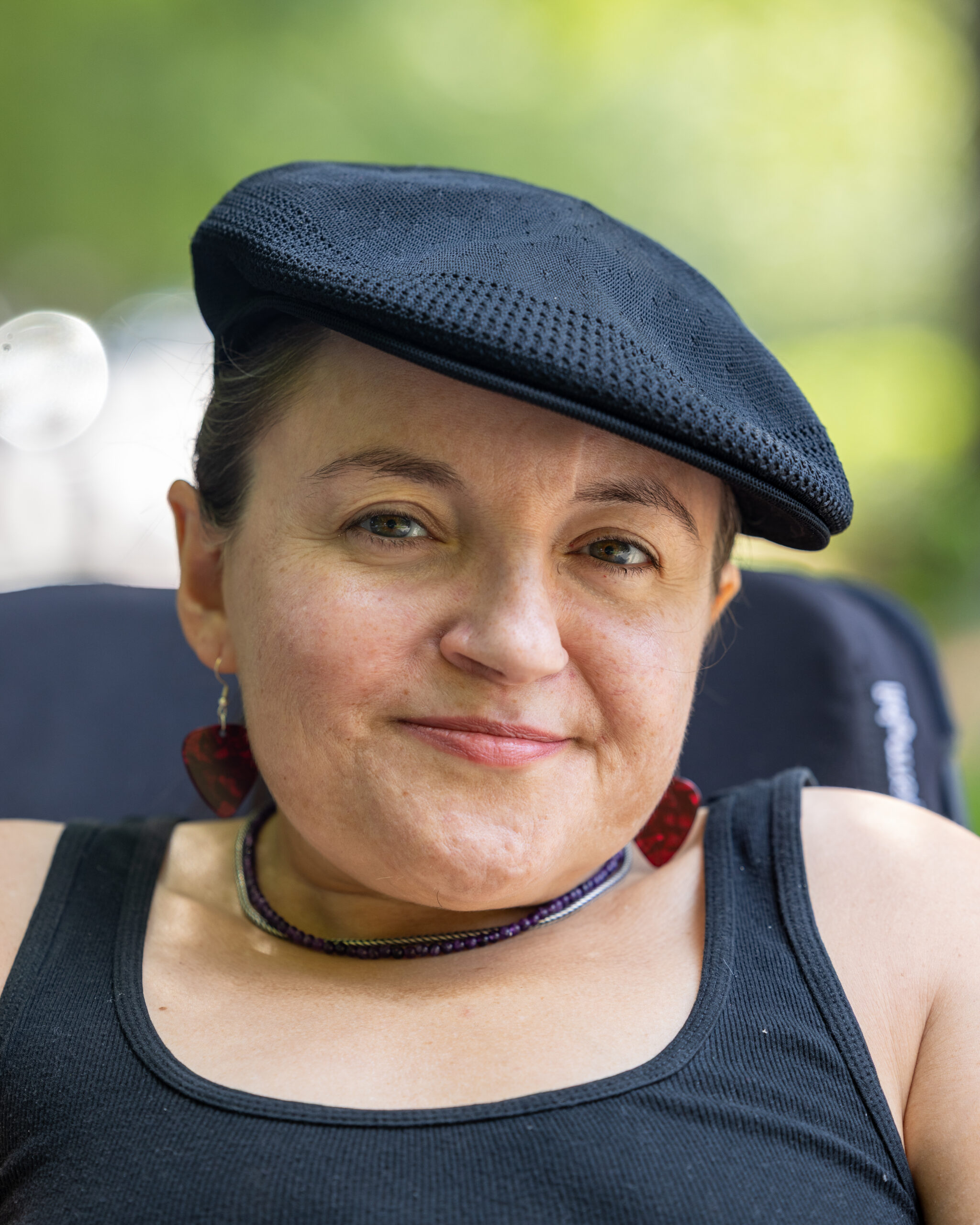
Dr. Bethany Stevens is a wheelchair-using doctoral graduate at Georgia State University’s Sociology Department and a sexual health educator. Trained as an attorney and holding a Master of Arts in Sexuality Studies, she has a diverse range of interests that ground her work in human rights and social justice. Her publications and invited talks address a range of disability topics, including media analysis, sexual violence prevention, and policy analysis. Stevens lectures and offers workshops internationally and has taught courses in public health, disability studies, and social work across the United States. Please follow and engage with her on all platforms @disabethany.
Breakout Session:
People with intellectual and developmental disabilities (IDD) are too often framed as either desexual or hypersexual. Both deny agency and self-determination, our collective goal. This talk pushes back, drawing on disability studies scholarship that names the right to be an adult, to have relationships, to be safe from abuse, and to learn about sexuality as inseparable. That right to learn about sexual health matters because the same population fighting for sexual autonomy faces starkly elevated rates of sexual violence prevalence at roughly one in three (Tomsa et al., 2021). This significant problem is driven by systems supporting people with IDD, especially through restricted communication, caregiver dependency, isolation, and a persistent knowledge gap around consent. By choosing to deny their sexuality, people with IDD could be criminalized for their behavior and/or end up with unintended sexual consequences. Comprehensive sexuality education is consistently linked to protective outcomes, including decreased susceptibility to abuse (Andreassen et al., 2024), yet people with IDD remain among the least likely to receive it. Treating sexual health education as purely protective, severed from agency, is itself a failure: safety and self-determination reinforce each other, and real protection means taking seriously what people with IDD say they want to learn, not just what we fear they’ll do.