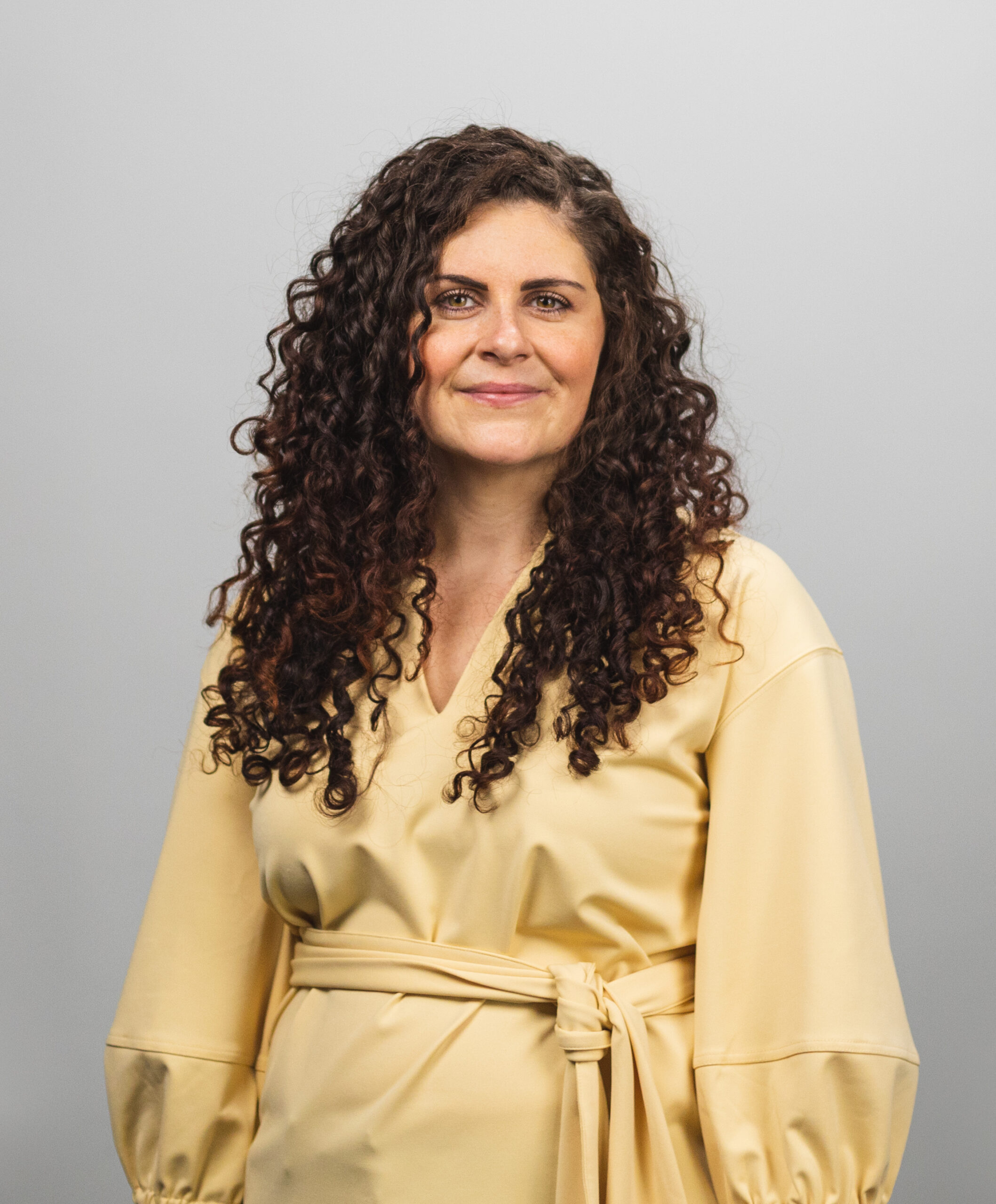
Dr. Carly Christensen (she/her) is a Disabled educator and scholar in Critical Disability Studies (CDS) education committed to rejecting traditional special education frameworks in favour of inclusive education that recognizes disability as a valued identity. She is an Assistant Professor at the University of British Columbia, where she teaches in the Educational and Counselling Psychology and Special Education (ECPS) department, working to shift the field away from deficit-based approaches toward anti-ableist pedagogy.
A graduate of the University of Cambridge’s Faculty of Education with a focus on perspectives in inclusive education, Carly has worked as a teacher in the United Kingdom, the United States, and Canada. She has taught in urban and rural schools, special education settings, an inner-city all-girls secondary school, an Indigenous adult education program, and First Nations self-governing schools. These diverse experiences have given her firsthand insight into how exclusion and inclusion are perpetuated within educational systems.
Carly is also the co-lead of the Inclusive Education Research Stream at the Canadian Institute for Inclusion and Citizenship (CIIC), where she works to mobilize disability justice frameworks in inclusive education research, practice, and policy. Her vision is to mobilize disability justice and anti-ableism to empower Disabled students and transform teaching practices. Carly also emphasizes that creating inclusive schools involves acknowledging disability history, dismantling its lingering effects, and ensuring schools become spaces of belonging and healing for Disabled learners.
Carly considers her most meaningful achievement to be parenthood—a journey that holds particular significance as a Disabled mom. When she’s not teaching, she loves listening to podcasts and audiobooks, cooking, and family dance parties.
Opening Keynote:
Rethinking Inclusion Through Disability Justice
Inclusion is a widely shared goal across education, health, and social services. But inclusion cannot be meaningfully realized without disability justice. A central challenge is that ableism is often misunderstood — or not recognized at all — as a form of discrimination. As a result, practices that exclude, limit, or harm disabled people can be normalized within systems that see themselves as inclusive.
This keynote explores how ableism operates, both broadly and within school systems, shaping expectations, policies, and everyday interactions with children and adults with disabilities. Grounded in disability history, this session emphasizes that these are not just issues of the past — they continue to reverberate into the present through ongoing inequities and disability rights concerns.
Disability justice offers a framework that makes ableism visible and gives us tools to actively challenge it. Schools and service systems are not neutral — they are sites of world-building. The language we use, the representations we circulate, and the structures we design all shape what is possible for disabled children and adults. When grounded in disability justice and anti-ableism, inclusion becomes more than placement — it becomes a commitment to dignity, belonging, and changing the conditions that shape disabled people’s lives.
Participants will leave with practical ways to:
- identify how ableism shows up in schools and service systems
- reflect on disability language and representation
- reframe everyday practices in ways that expand what is possible for disabled people